
Drużyna do zadań specjalnych is a cooperative card game set in the world of Marcin Mortka’s books. Players take on the roles of an unusual group of heroes who join forces against the Evil One, facing monsters, intrigues, and the more mundane problems of the Valley’s inhabitants along the way.
We are not familiar with the books, so we can only judge the game based on its gameplay and how well the presented world works without any knowledge of its literary source material. As it turns out, reading the books is not necessary to enjoy the game, although it would certainly help players recognize more references and jokes connected with the individual characters.
Gameplay
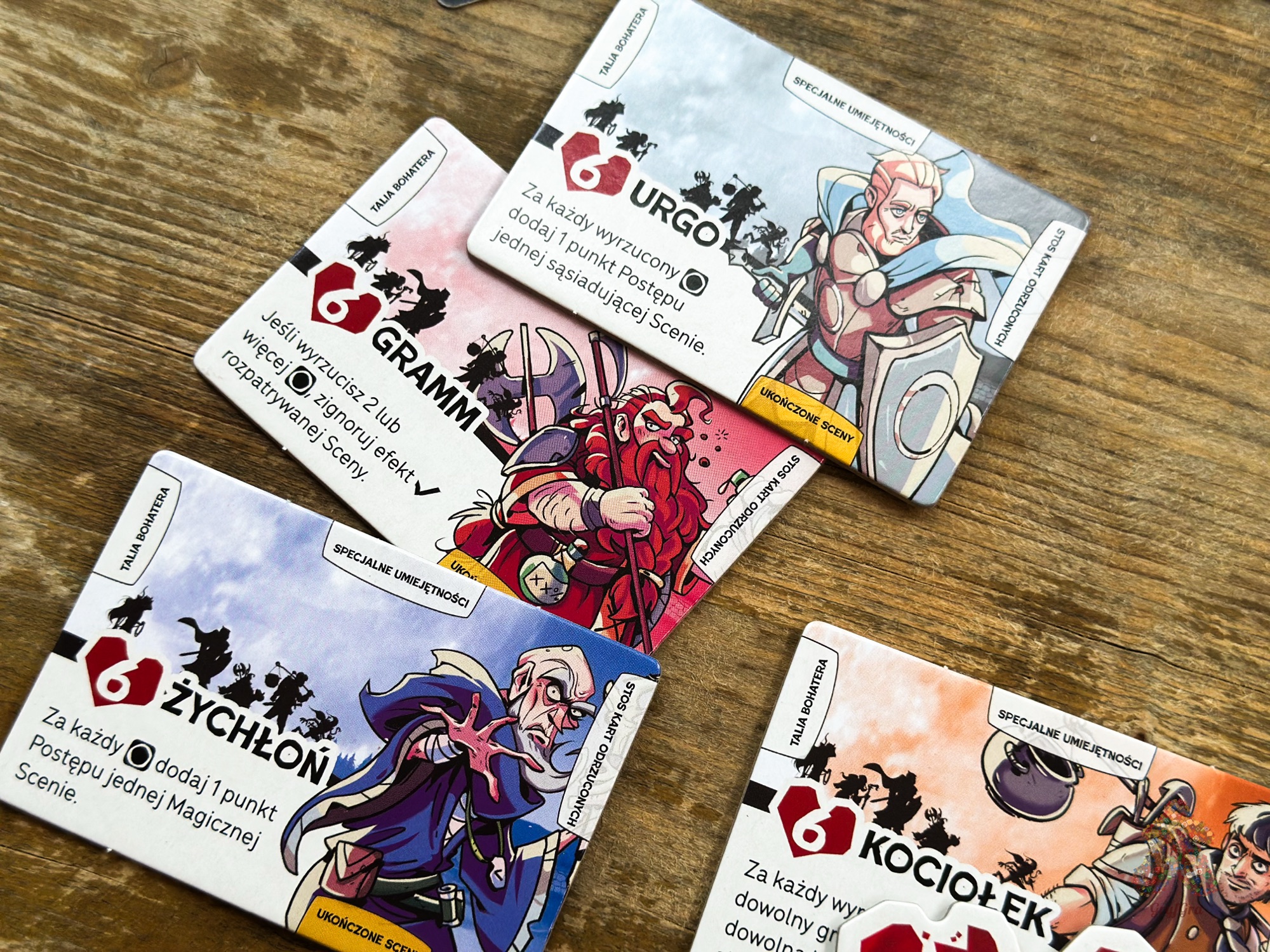
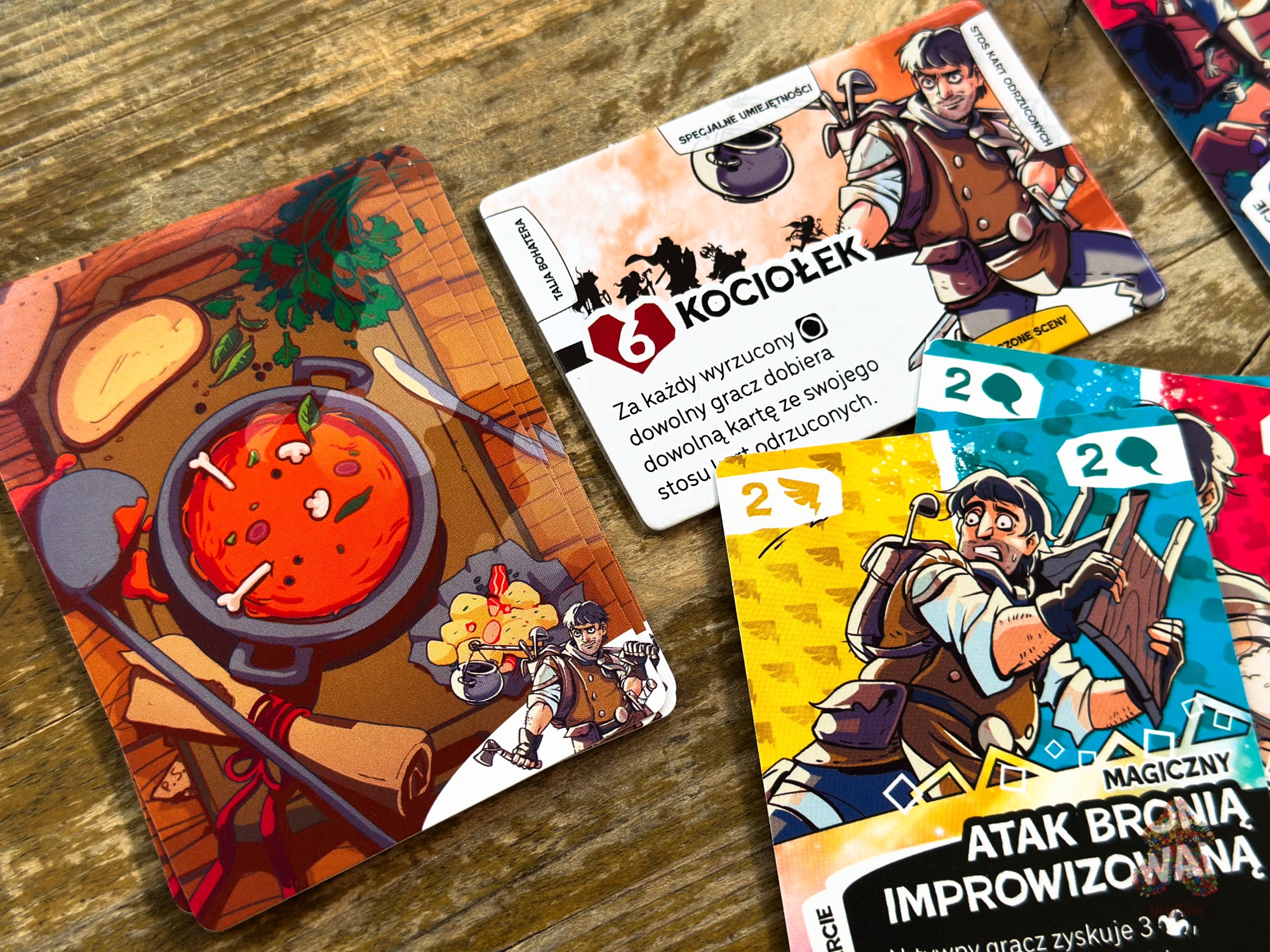
At the beginning of the game, each player chooses a hero and receives their character board and unique deck of action cards. The characters differ in their wound limit, special ability, and the distribution of traits found on their cards. The game features four traits: Combat, Talk, Ingenuity, and Dexterity.
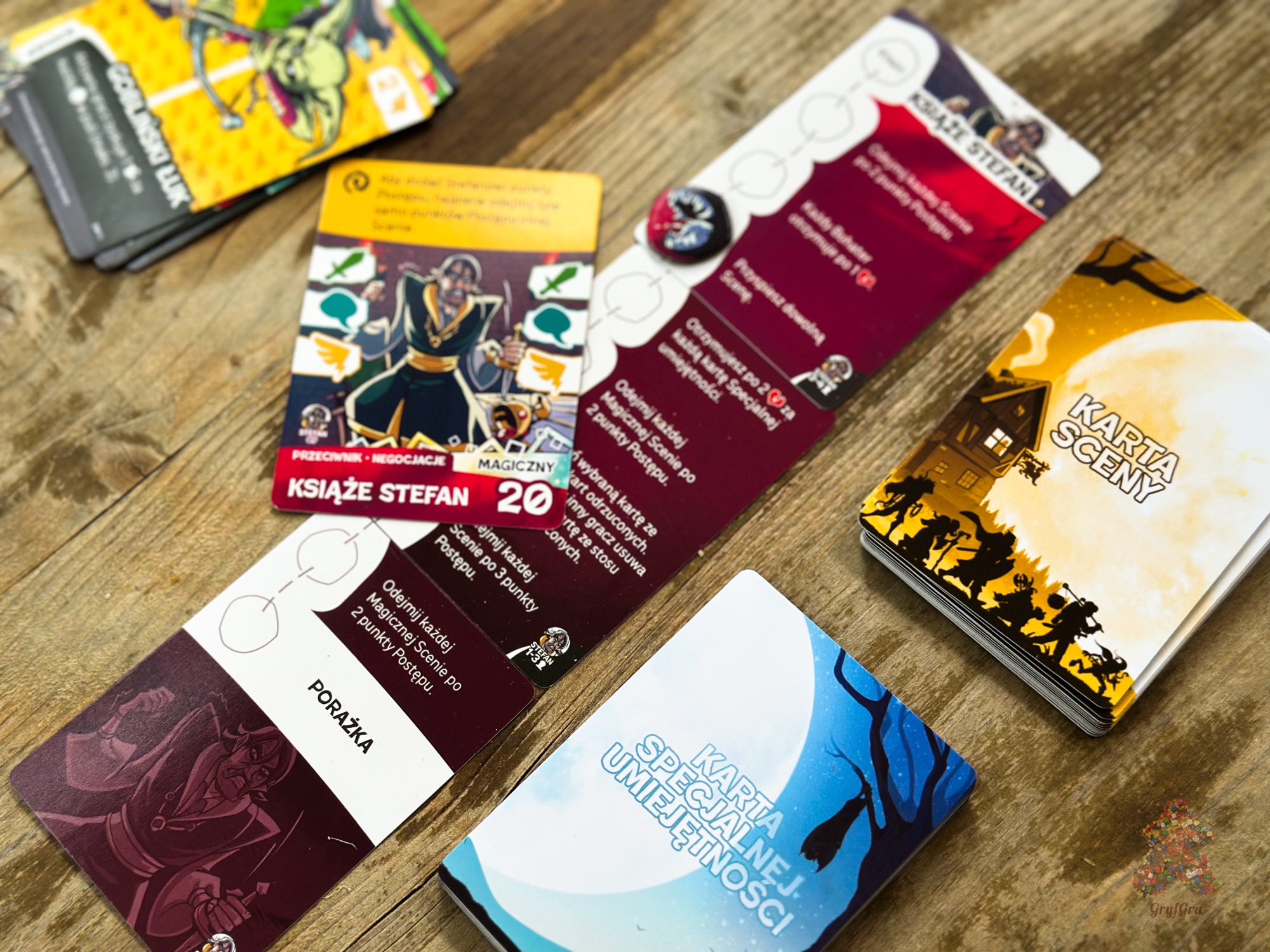
The players also select one of five opponents. Each of them has their set of scene cards and a different Evil’s track. Four scenes are placed on the progress board, representing challenges the heroes must overcome. Each scene has a difficulty level, required traits, its track, and effects that may either help the team or make its task more difficult.
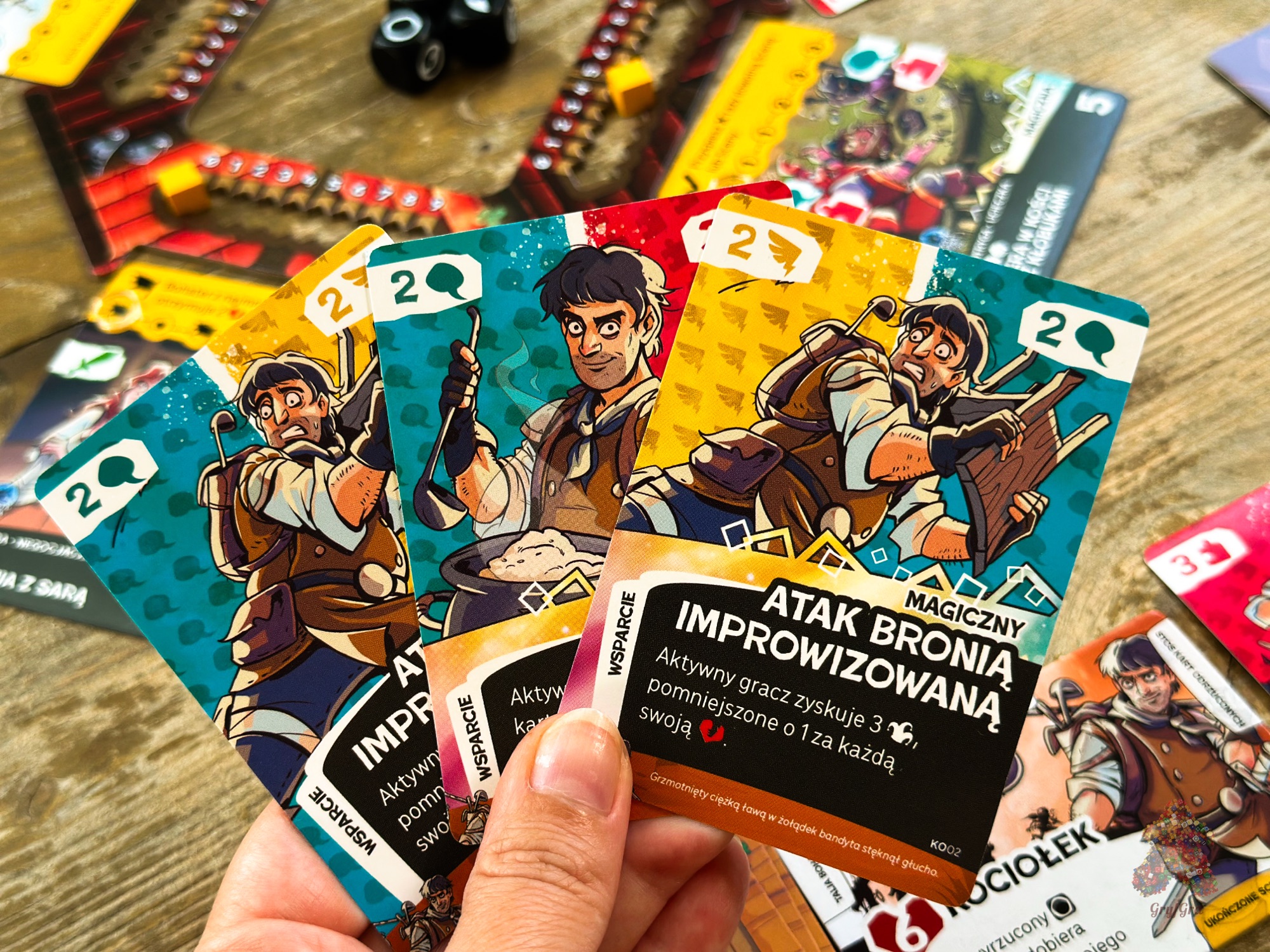
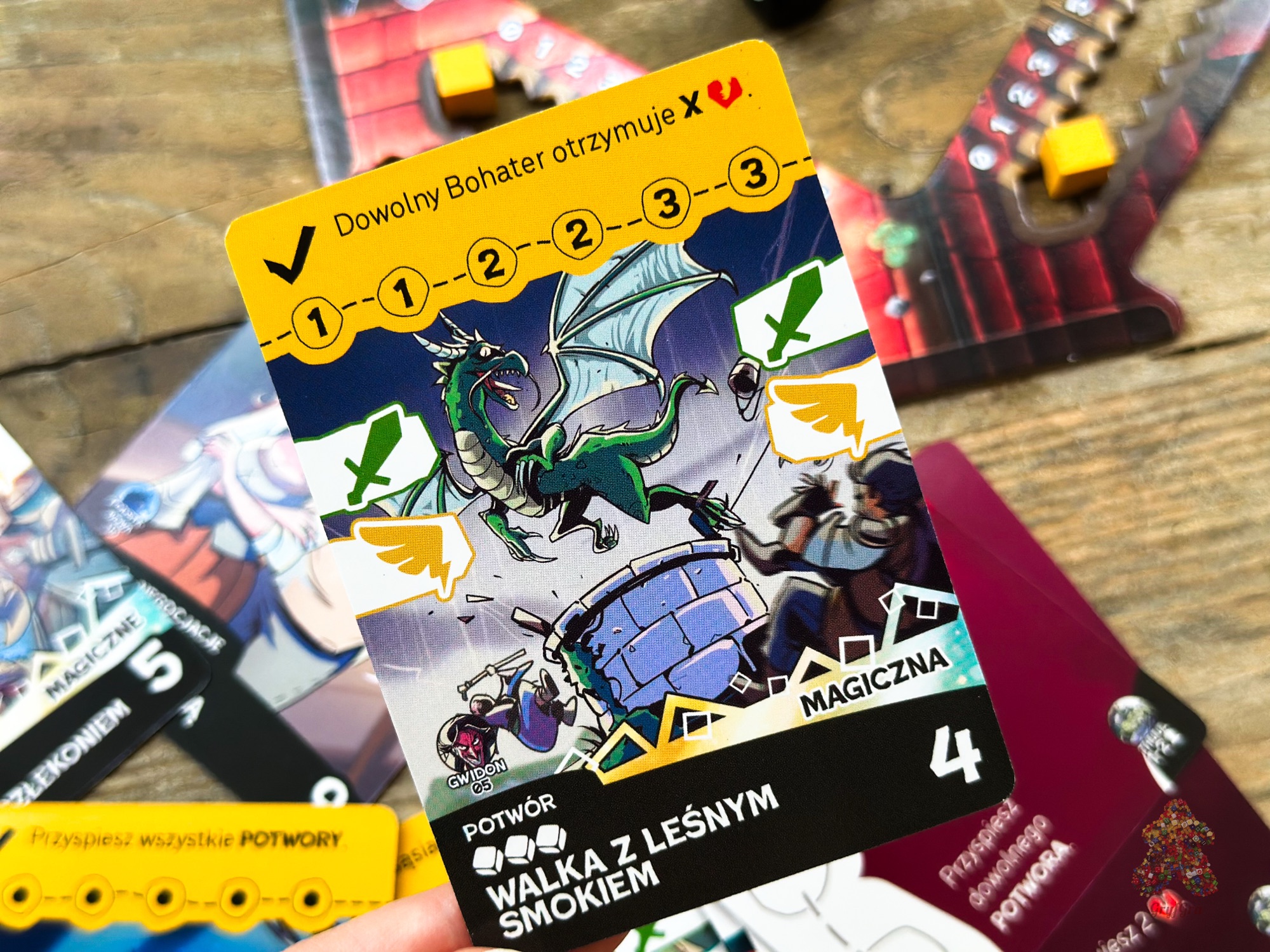
A player’s turn begins with the action phase. The active player plays one card between two scenes. The symbols on its left and right sides are compared with the requirements of the adjacent cards. Matching traits allow the players to increase a scene’s progress. Even a side with no matching traits still provides one point, so no action is ever completely useless.
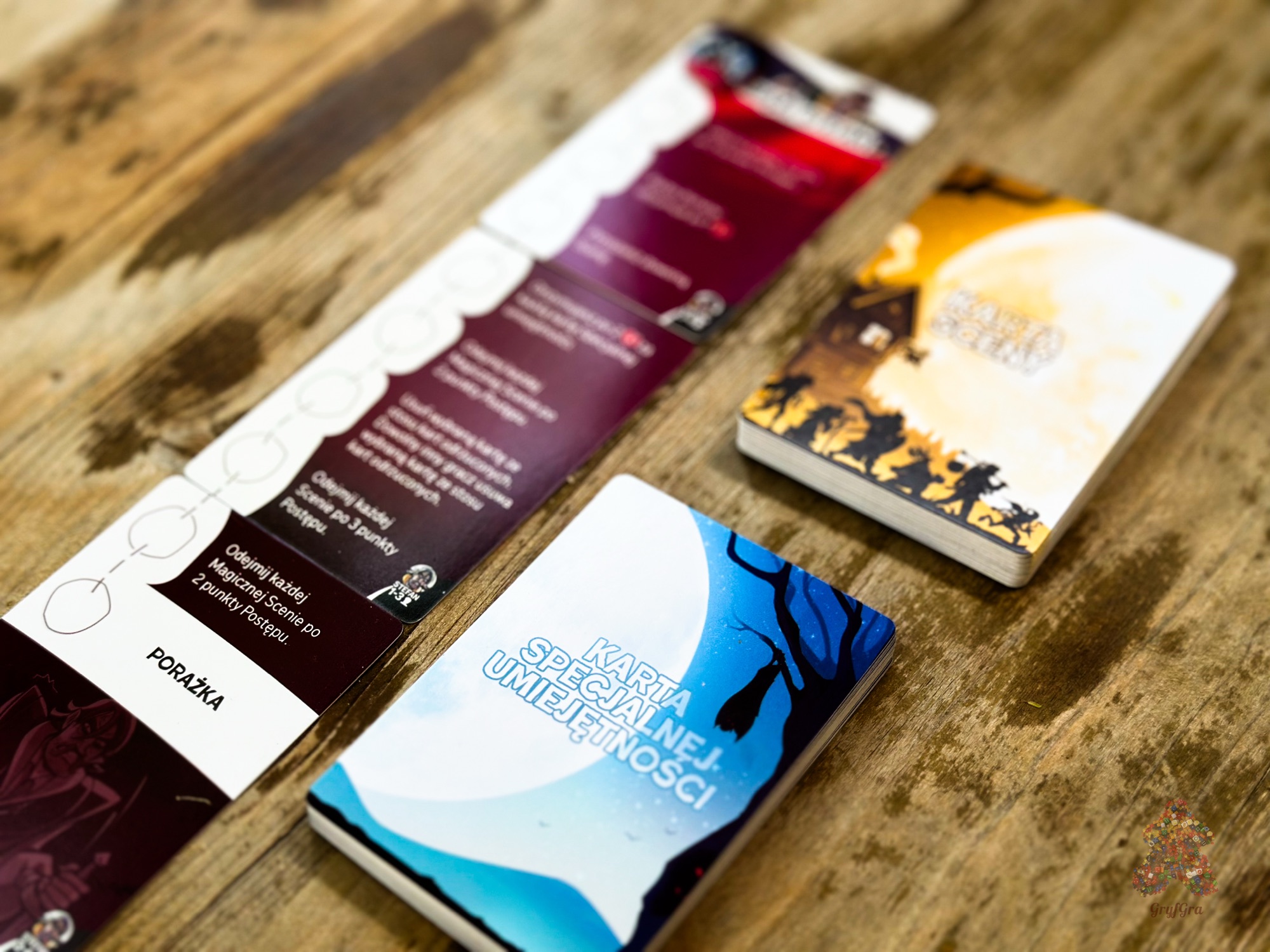
The chosen card position also has additional consequences. Scenes that are not adjacent to the played card are accelerated. Their markers move along their tracks, triggering further effects, while a scene ignored for too long may eventually be discarded. This also advances the marker on the Evil track, bringing the team closer to defeat.
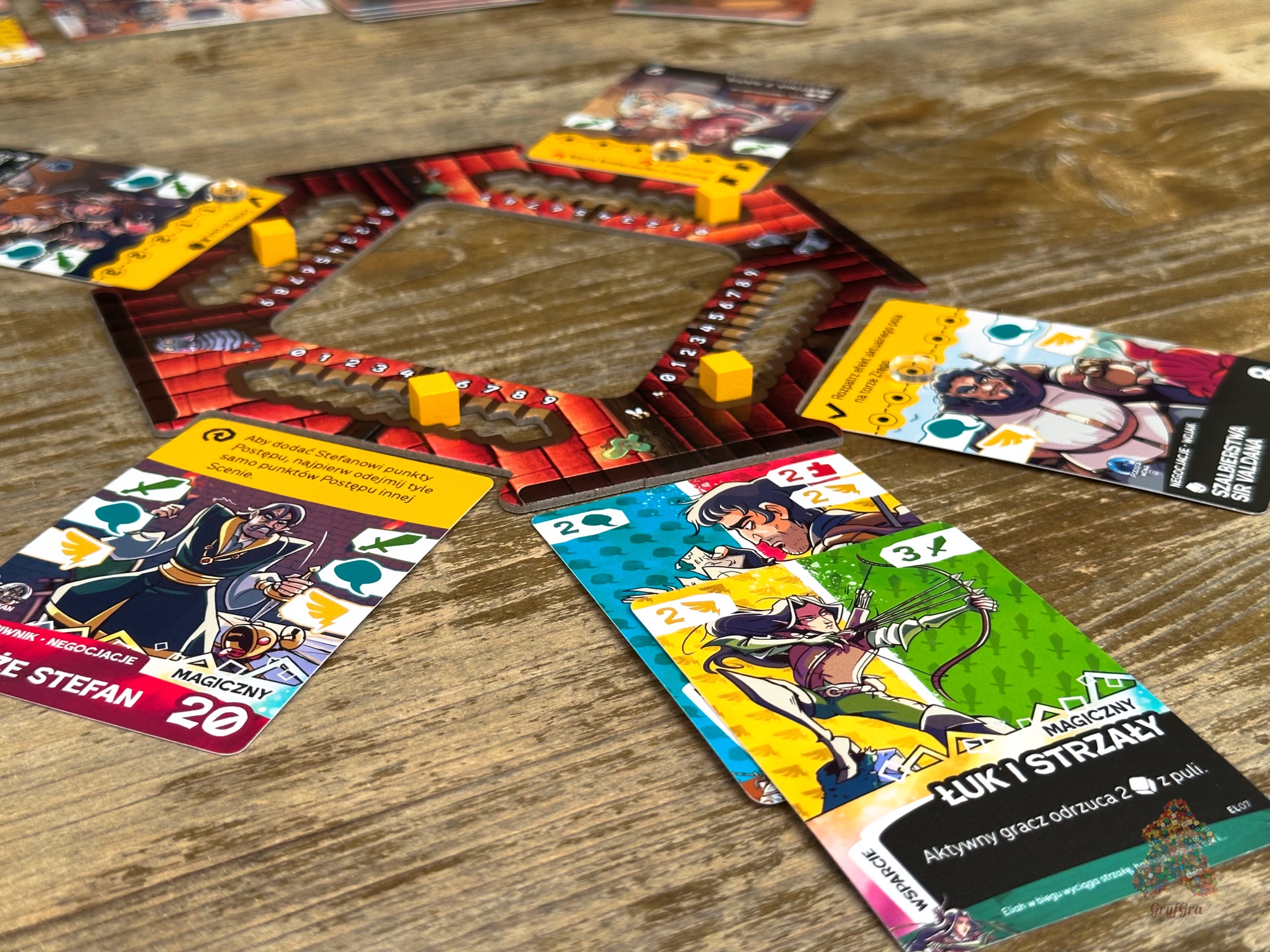
Another player may support the active hero by playing one of their cards. It does not directly add more symbols but allows the players to resolve the effect written on it. Support effects may, among other things, provide additional progress points, heal wounds, or manipulate the positions of scene markers.
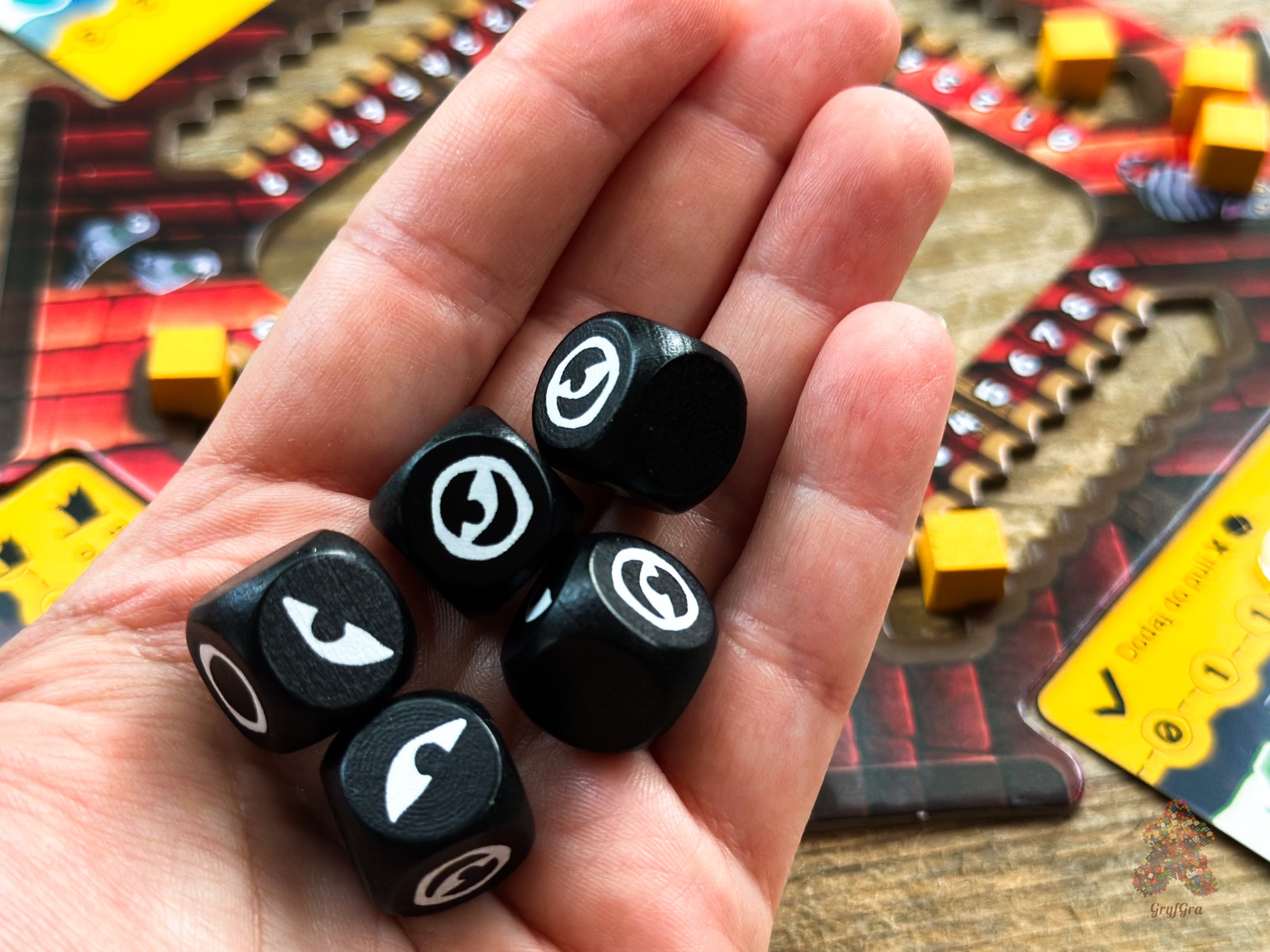
Once the required number of points has been accumulated, the active player may begin the adventure phase. They choose a prepared scene and roll all the dice currently available in the pool. Their results may have no effect, activate the hero’s special ability, or reduce the progress earned earlier. Dice may be rerolled, but each reroll costs the player one wound.
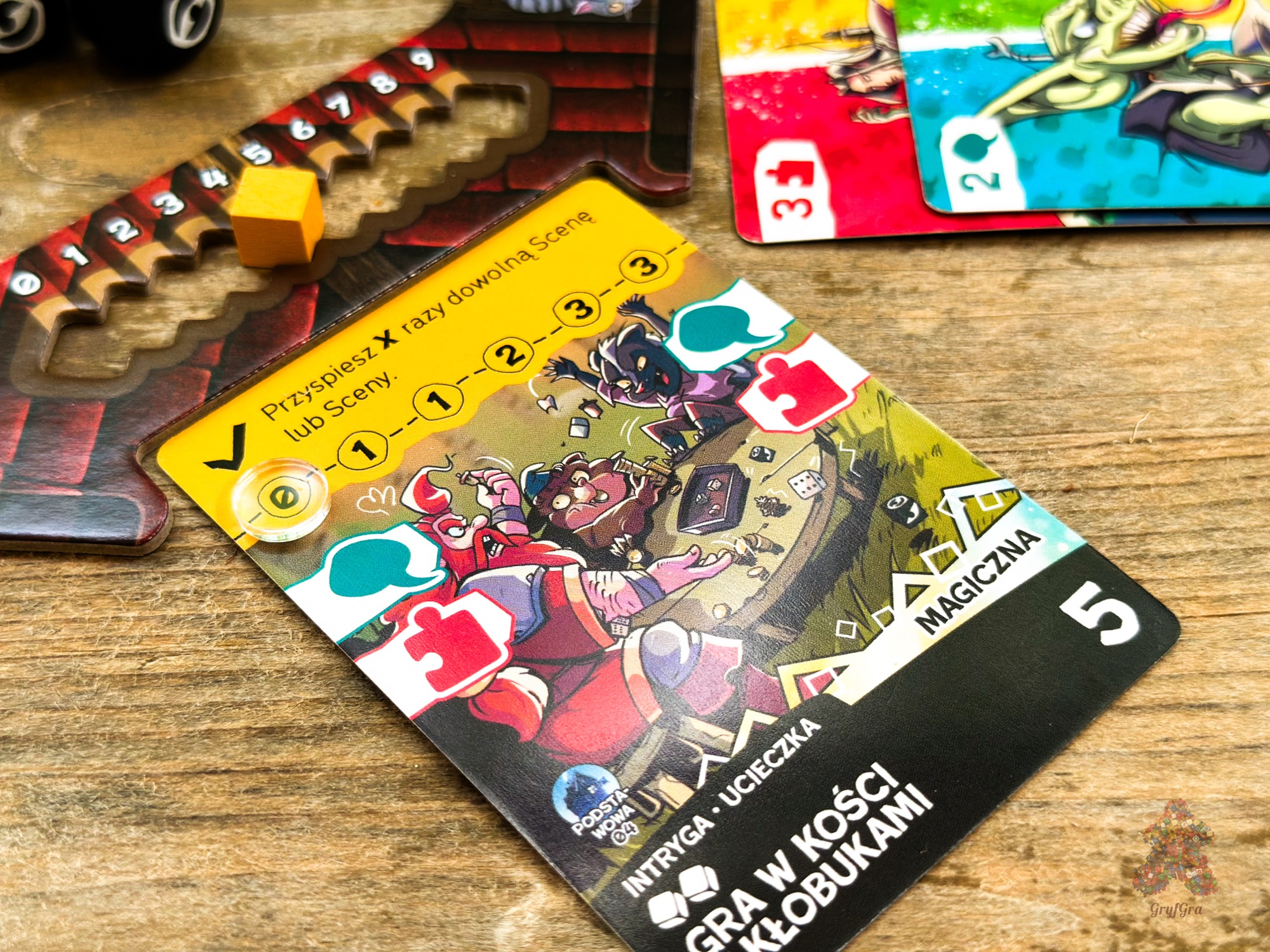
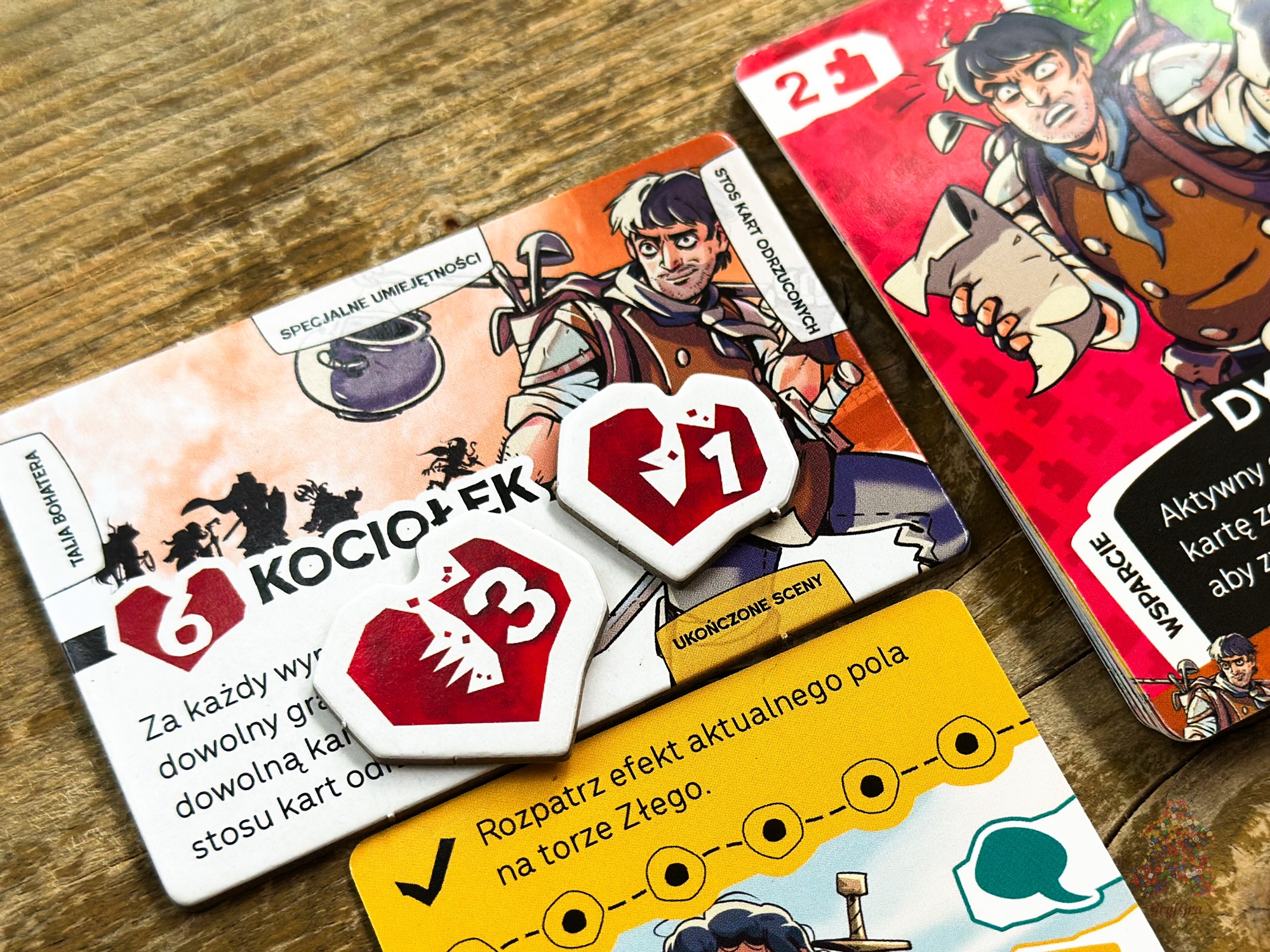
If the progress level still meets the requirement after resolving the roll, the scene is completed and replaced with a new challenge. Following a successful adventure phase, the team proceeds to the camp phase. The players refill their hands, while the active hero may spend completed scene cards to gain a new special ability.
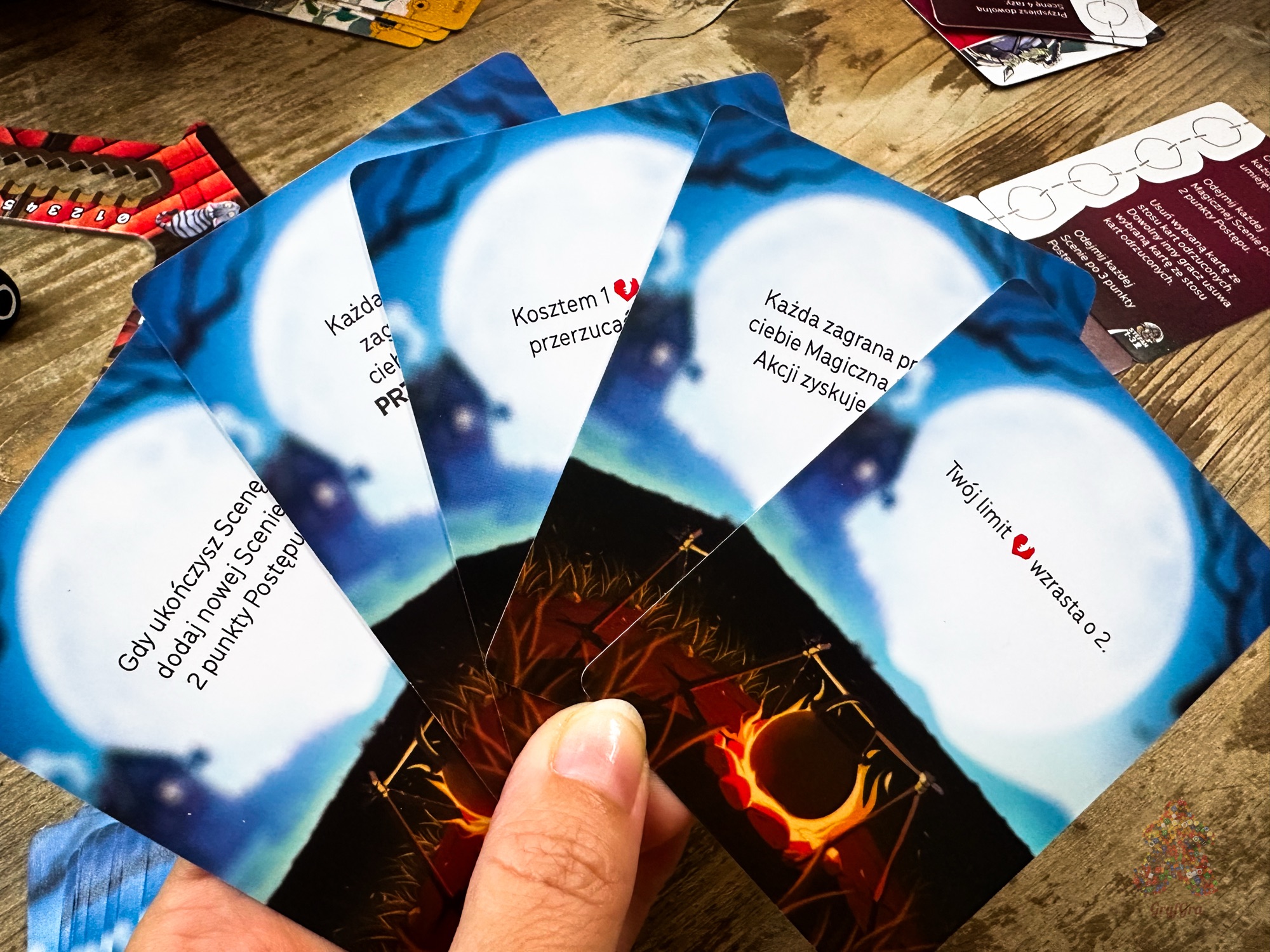
The team wins by completing the main opponent’s scene or exhausting the entire scene deck. The players lose if, among other things, a Hero suffers too many Wounds, the marker reaches the end of the Evil track, or the active player is left without any Action cards.
Impressions
We played Drużyna do zadań specjalnych several times with two and three players. We definitely enjoyed it more with three. The nature of its cooperation favors larger teams because they provide access to more cards, symbols, and support options before the players have an opportunity to refill their hands.
The characters have clearly distinct personalities. This affects not only their starting special abilities but also the distribution of traits on their action cards. Choosing Heroes is therefore more than a purely aesthetic decision. It is worth ensuring that the members of the team complement one another and provide access to all the symbols the group may need.
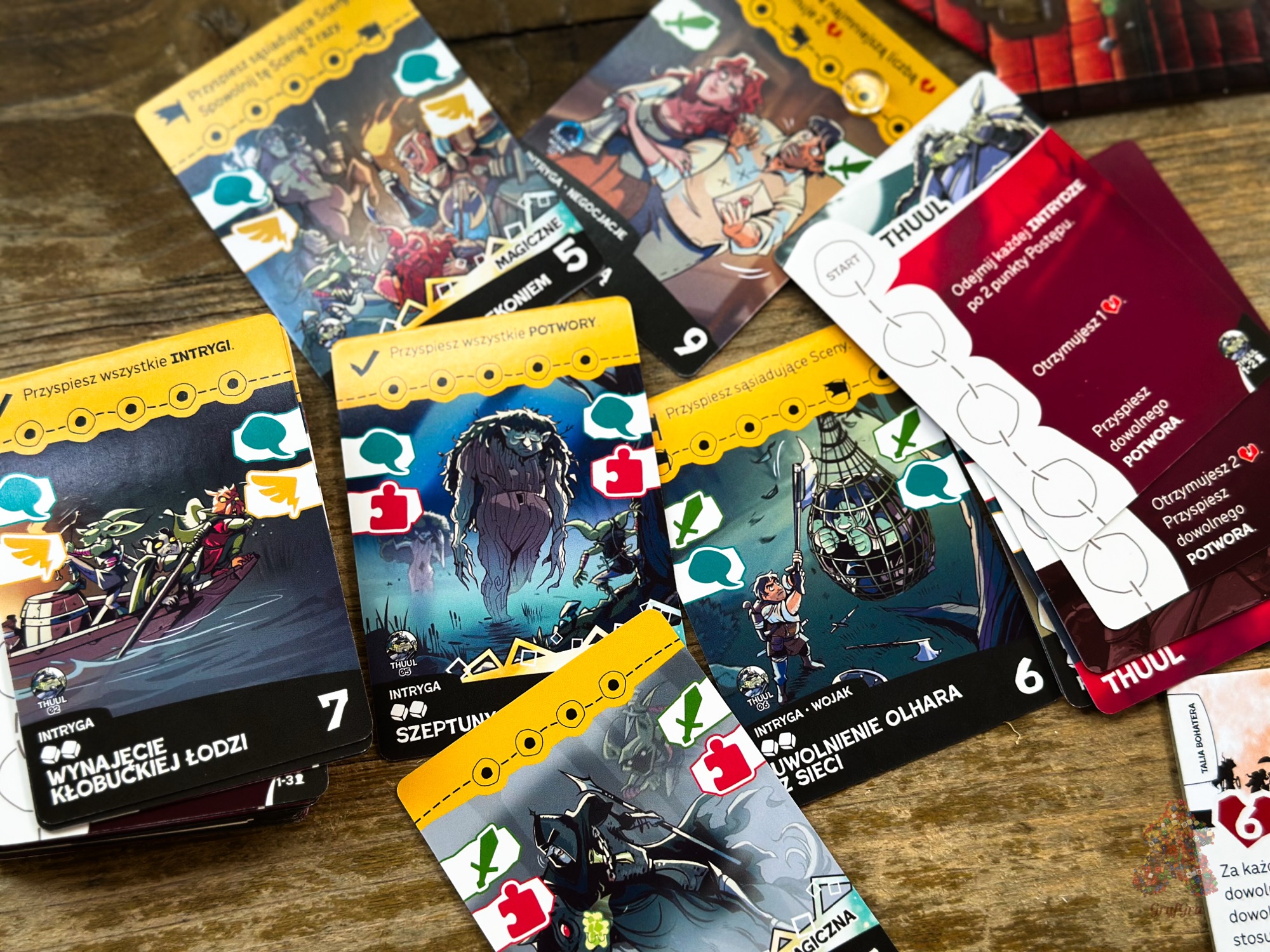
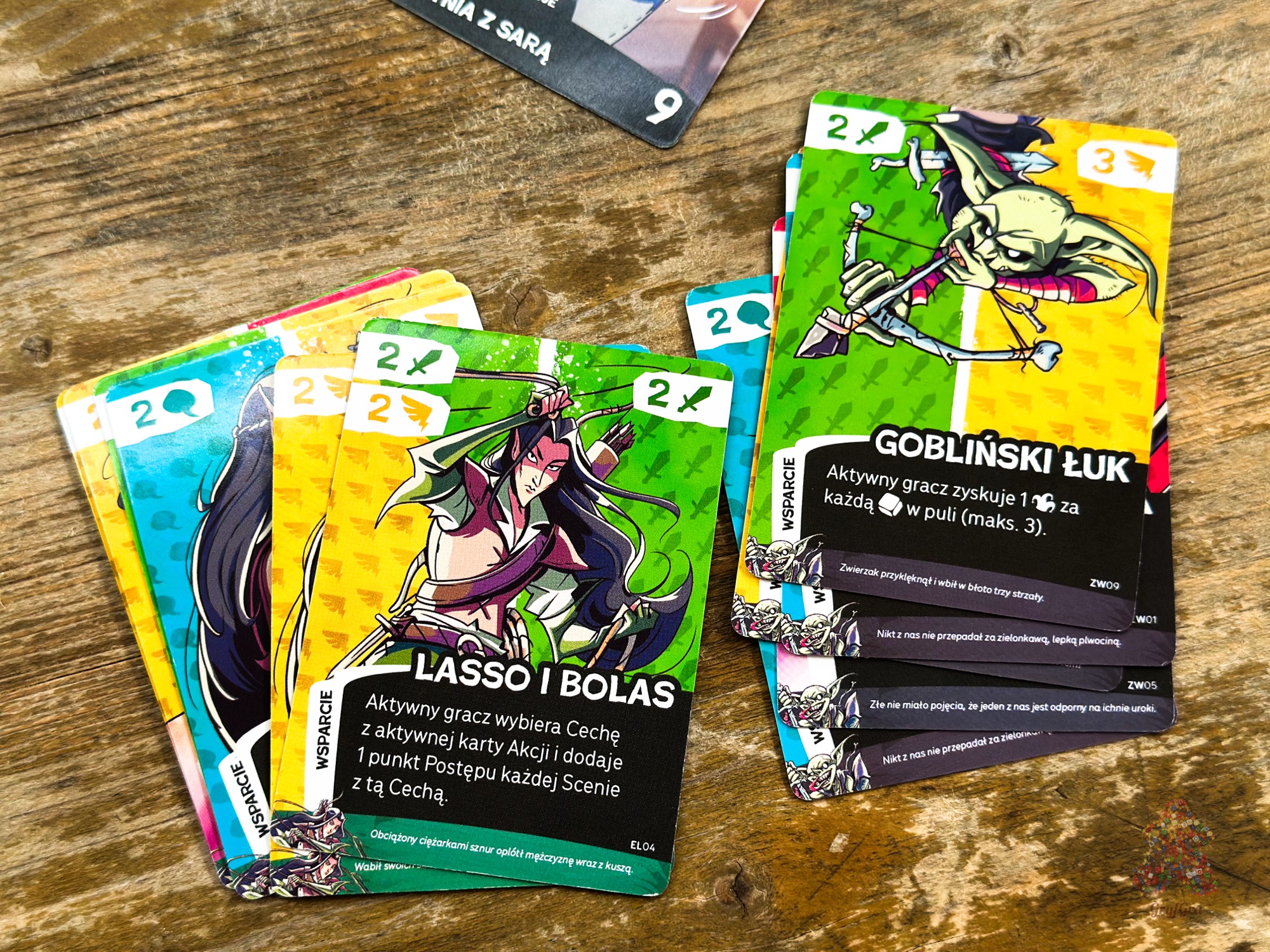
This is particularly important in a two-player game. A poorly selected pair may have a noticeable shortage of a particular trait, making it much less efficient to advance certain scenes. With three heroes, it is easier to compensate for the weaknesses of individual characters and respond to the changing situation.
Cooperation is not limited to jointly deciding which scene should be completed next. Players must also determine when to sacrifice one of their cards to support the active hero. Each such action reduces the number of cards in their hand, while new ones can only be drawn during the camp phase. The players must therefore be careful not to create a situation in which one of them runs out of cards and causes the team to lose immediately.
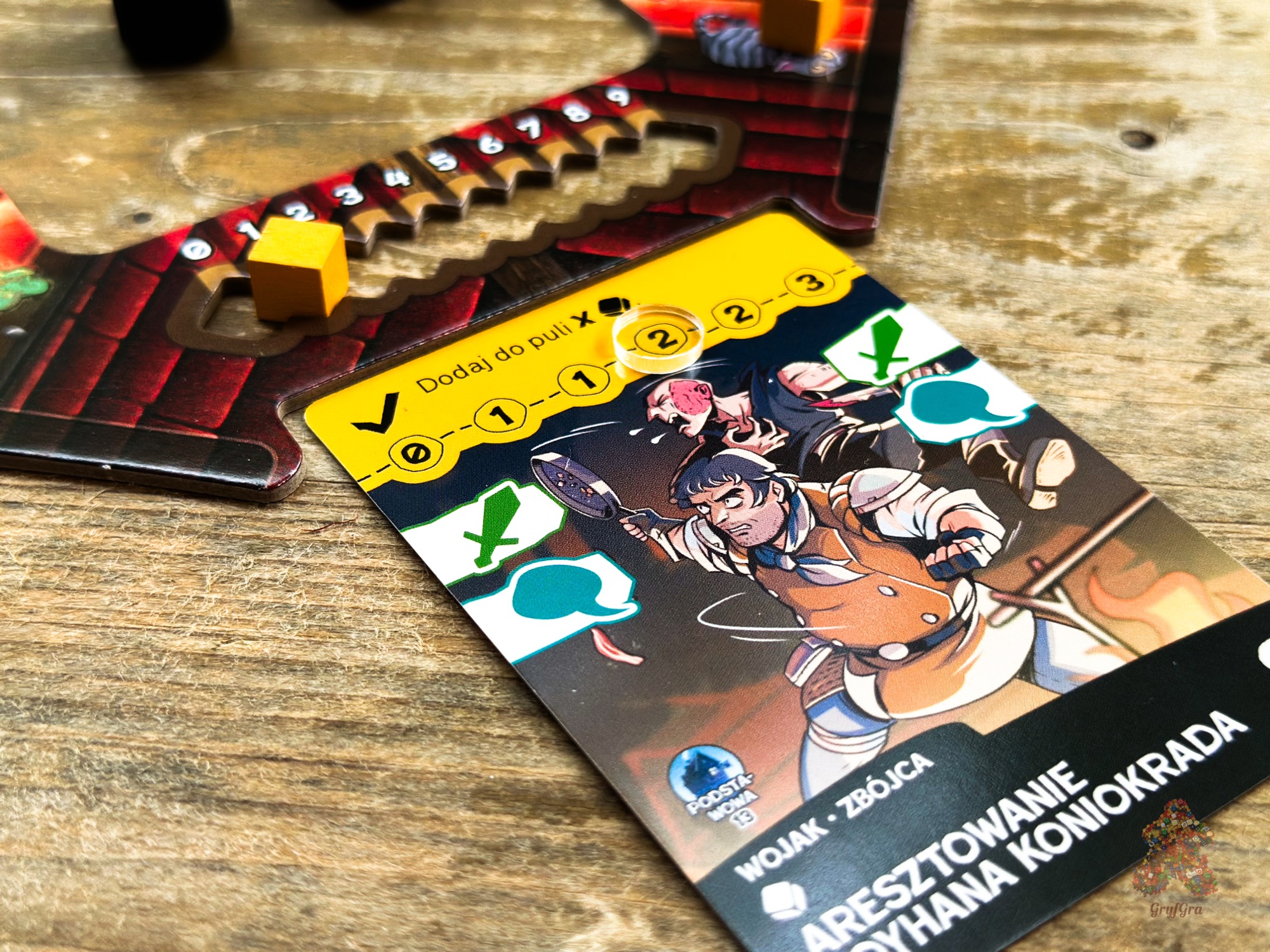
The arrangement of scenes around the board also works well. By playing a card, we advance two adjacent challenges but simultaneously accelerate the others. We cannot focus on one task indefinitely while ignoring everything else. The group must monitor several tracks at the same time and decide which negative effects it can still endure and which have already become too dangerous.
The game itself is not particularly difficult, but it requires concentration. It is easy to overlook a change in progress, an effect triggered on a scene track, or the consequences of advancing the Evil’s marker. It is worth checking in advance where the marker will stop and who will be affected by the resulting penalty. The same effect may be nothing more than a minor inconvenience in one situation but seriously harm a weakened hero or a player with very few cards in another.
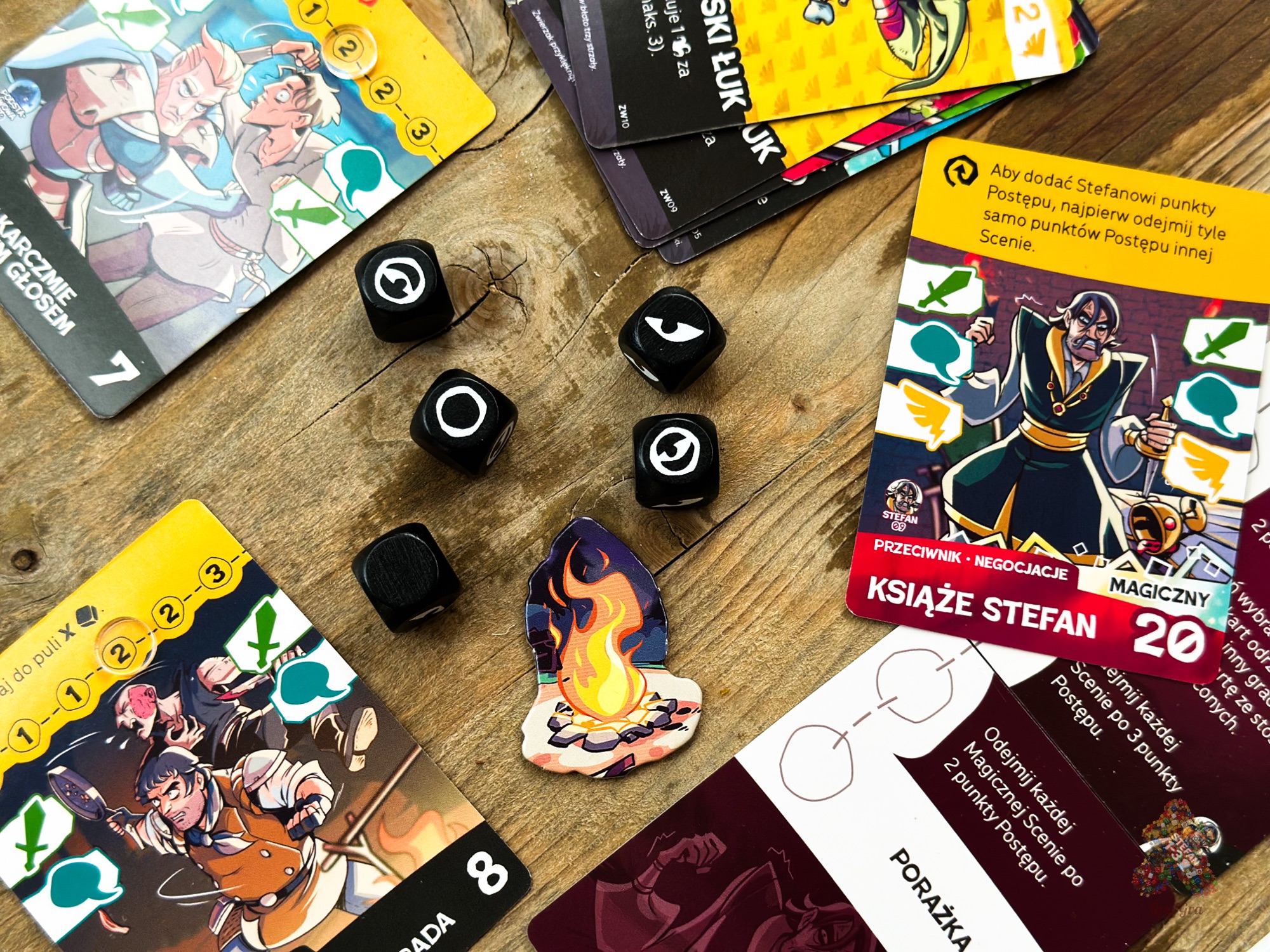
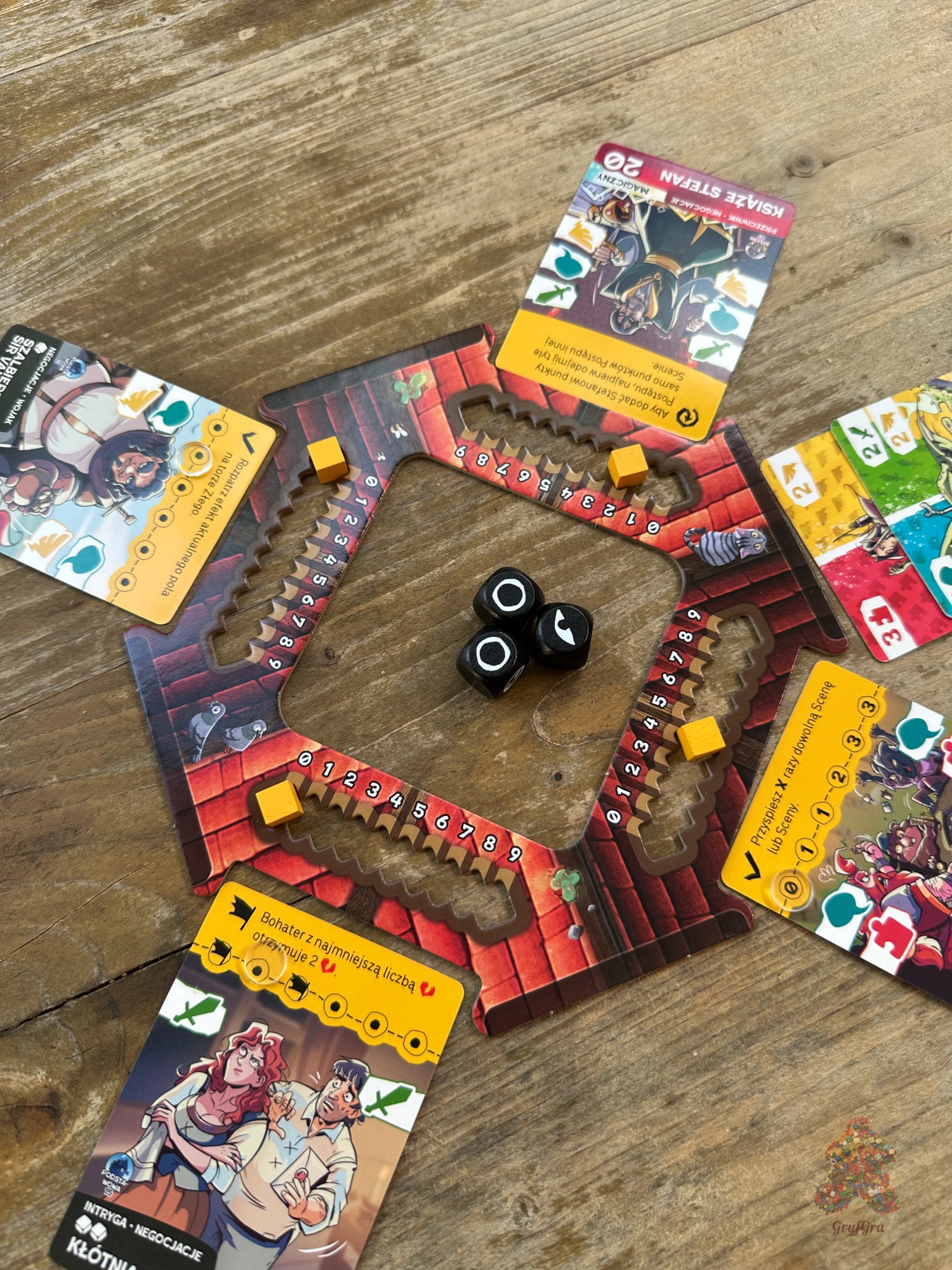
The variety of opponents is another advantage. Each one has their scenes and ways of making life more difficult for the team. As a result, subsequent games call for somewhat different approaches.
The randomness of the dice introduces uncertainty into even a well-prepared plan, but the players have ways to mitigate it. Before beginning an adventure, it is worth building up some spare progress; while in a critical situation, the active player can reroll a die by taking a wound. The outcome is therefore not left entirely to chance—the players must assess the risk beforehand and decide when it is truly worth attempting to complete a Scene.
We really like the game’s artwork. It is colorful and whimsical, perfectly matching the humorous nature of the presented world. The illustrations of the characters and scenes are full of personality, while the amusing descriptions make the game’s light-hearted, adventurous atmosphere easy to appreciate even without any knowledge of the books.
Summary
Drużyna do zadań specjalnych is an accessible cooperative game that requires careful card management and keeping track of several threats simultaneously. It worked best for us with three players, as this provided a greater variety of traits and more interesting opportunities to support one another. Its likeable heroes, diverse opponents, and excellent, humorous artwork make it enjoyable even for players unfamiliar with the books on which it is based.